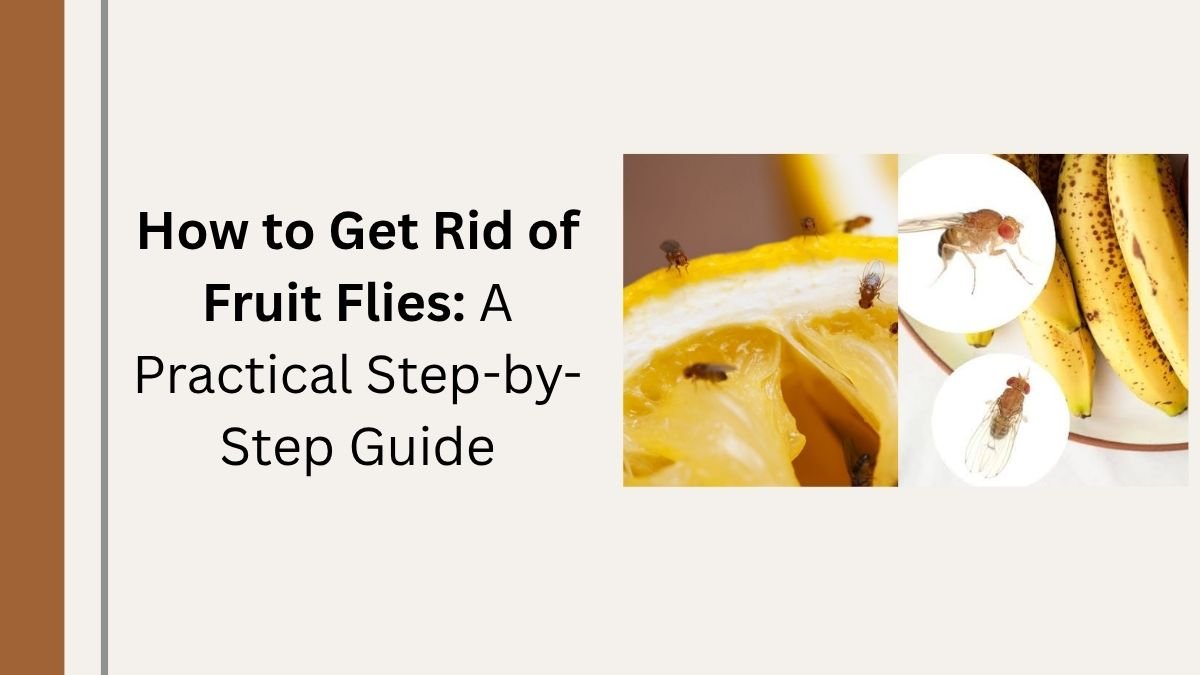
Fruit flies can seem to appear overnight. A few tiny flies around a bowl of bananas can quickly turn into a persistent kitchen problem, especially when ripe produce, food scraps, or other organic material gives them a place to feed and reproduce.
The good news is that you usually don’t need complicated pest control to get rid of fruit flies. The most effective approach is to remove the places where they breed, clean potential food sources, and use traps to catch the adults that remain.
This guide explains how to get rid of fruit flies, how to find their breeding source, how to make a simple vinegar trap, and what you can do to prevent them from coming back.
What Are Fruit Flies?
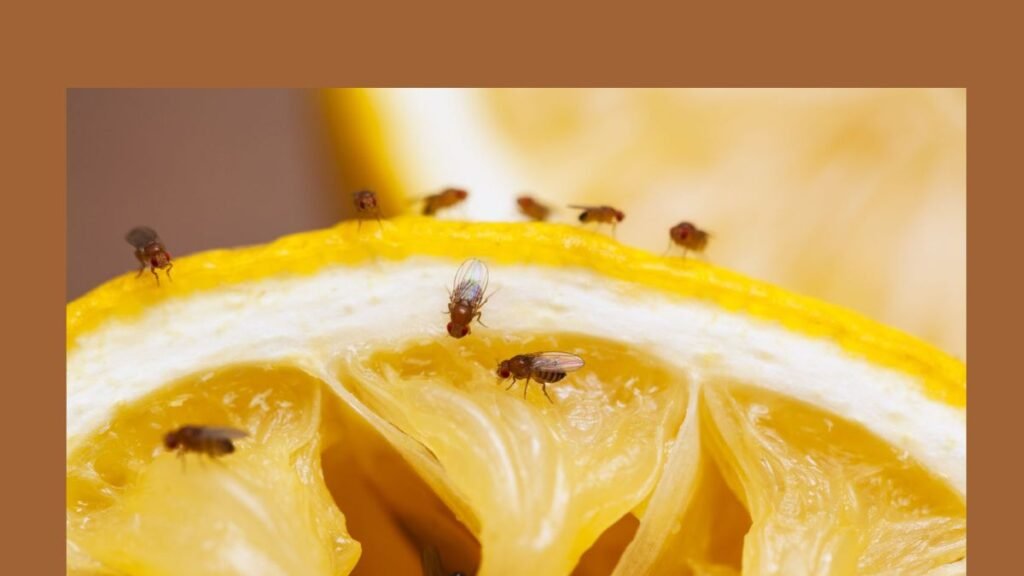
Common household fruit flies, often called vinegar flies, are very small flies that are usually tan or brown and may have reddish eyes. Adults are only around 2–3 mm long. They are strongly attracted to ripe, fermenting, or decaying fruits and vegetables.
Fruit flies don’t necessarily come from the fruit sitting in front of you. They can also develop around:
- Overripe fruit and vegetables
- Food scraps
- Garbage and recycling containers
- Sticky spills
- Empty bottles or cans containing food or drink residue
- Moist areas containing organic material
- Garbage disposals
- Some drains
Because fruit flies have a short life cycle, ignoring a small infestation can allow the population to increase quickly.
Also Read: How to Reset a Router 2026: A Simple Step-by-Step Guide
How to Get Rid of Fruit Flies
The most reliable strategy is to combine source removal, thorough cleaning, and trapping. A trap may catch many adult flies, but it won’t solve the problem if eggs and larvae are still developing somewhere in your home.
Follow these steps.
1. Find Where the Fruit Flies Are Coming From
Before making traps, look for the source.
Check your kitchen carefully, particularly areas where food is stored or discarded. Look at fruit bowls, vegetable baskets, garbage bins, recycling containers, and areas underneath or behind appliances.
Pay special attention to produce that looks slightly damaged or overripe. Fruit flies commonly develop in fermenting or decaying organic material.
Also check:
- Potatoes and onions stored in cabinets
- Forgotten fruit in a pantry
- Food residue under appliances
- Recycling bottles and cans
- Compost containers
- Garbage disposals
- Spills underneath a refrigerator or trash can
- Damp cleaning cloths containing food residue
Finding and removing the breeding source is more important than simply killing the adult flies.
2. Throw Away Overripe or Rotting Produce
Inspect all fruits and vegetables.
Discard anything that is moldy, leaking, fermenting, or significantly overripe. If you have outdoor plants, don’t leave fallen or rotting fruit around them because these materials can support fruit fly populations as well.
Don’t simply move questionable fruit to another part of the kitchen. Put it into a securely closed bag and remove it from the living area.
If you have several pieces of ripe fruit that you want to keep, refrigerating them can make them less accessible to common kitchen fruit flies.
3. Clean the Kitchen Thoroughly
Once the obvious food sources are removed, clean the areas where tiny amounts of organic material may remain.
Wipe countertops, shelves, tables, and the area around your garbage container. Clean up juice, wine, soda, or other sticky spills.
Wash containers before putting them into recycling, and empty food waste regularly.
The goal isn’t simply to make the kitchen look clean. You want to remove the odors and organic material that can attract and support flies.
Good sanitation is one of the key methods recommended for reducing fruit fly populations.
4. Clean the Garbage and Compost Area
Garbage bins can become an overlooked breeding site.
Remove the garbage and clean the inside of the bin if there are food residues or spills. Allow it to dry before putting in a new bag.
If you use a compost container indoors, empty it frequently and keep it covered when possible.
Don’t leave fruit peels, vegetable scraps, or other fermenting food waste exposed for long periods.
5. Check Drains and Garbage Disposals
If fruit flies keep appearing even after you’ve removed visible food sources, investigate drains and garbage disposals.
Food residue and organic material can accumulate in these areas and provide conditions that attract small flies.
Clean the disposal according to the manufacturer’s instructions. For drains, use an appropriate drain-cleaning method that is safe for your plumbing system.
Avoid mixing household cleaning chemicals. Combining products such as bleach and acidic cleaners can create dangerous fumes.
If flies continue coming from a drain despite cleaning, the problem may not be ordinary fruit flies. Another small fly species, such as a drain fly, may require a different approach.
6. Make a Simple Apple Cider Vinegar Trap
A homemade trap can help reduce the number of adult fruit flies while you work on eliminating their breeding source.
A simple version uses:
- A small bowl, jar, or cup
- Apple cider vinegar
- A small amount of unscented liquid dish soap
- Optional paper funnel or loose covering
Pour a small amount of apple cider vinegar into the container and add a drop of unscented dish soap.
The vinegar provides an attractive food-like odor, while the soap reduces the liquid’s surface tension, making it harder for flies to escape after landing in the solution. University extension guidance describes similar vinegar-and-soap traps for monitoring small fruit flies.
Place the trap close to where you see the most flies.
Replace the liquid regularly when it becomes dirty or loses its effectiveness.
7. Use Traps as a Supplement, Not the Main Solution
It’s tempting to place several traps around the kitchen and consider the problem solved. Traps can catch adult flies, but they don’t remove eggs, larvae, or the material where flies are reproducing.
That distinction matters.
For household infestations, think of the process this way:
Remove the breeding source → clean the area → trap remaining adults → prevent new food sources.
For certain fruit fly species that attack garden fruit, traps can also be useful for monitoring. However, trapping alone may not provide complete control.
How Long Does It Take to Get Rid of Fruit Flies?
The answer depends on how large the infestation is and whether you’ve found the breeding source.
If the source is removed quickly, you may notice a substantial reduction in adult flies after cleaning and trapping. However, you may continue seeing some flies for a while because individuals that have already developed can still emerge.
Fruit flies have several life stages—egg, larva, pupa, and adult—so killing visible adults doesn’t necessarily eliminate the entire population immediately.
If you keep seeing new flies day after day, assume there is still a breeding source somewhere until you’ve ruled out the common possibilities.
Common Mistakes That Make Fruit Fly Problems Worse
Only killing the visible flies
Swatting or spraying adult flies may provide temporary relief, but it doesn’t address the material where they reproduce.
Leaving ripe fruit uncovered
A fruit bowl can become an easy food source. During an infestation, inspect produce frequently and refrigerate suitable items.
Forgetting about recycling
An empty bottle or can can still contain enough residue to attract flies. Rinse recyclable containers before storing them.
Ignoring small spills
A little fruit juice or fermented drink under an appliance may be difficult to notice but can provide an attractive food source.
Using traps without cleaning
Traps are useful for catching adults, but they work best as part of a broader control strategy. Removing breeding material is the critical step.
Assuming every tiny fly is a fruit fly
Fruit flies aren’t the only small flies found indoors. Drain flies and fungus gnats can look similar at a glance but are associated with different conditions.
How to Prevent Fruit Flies From Coming Back
Once you’ve cleared the infestation, prevention is much easier than dealing with another large population.
Store ripe fruit properly
Keep ripe or cut fruit refrigerated when appropriate. Don’t leave damaged produce sitting at room temperature for extended periods.
Keep counters clean
Clean food and drink spills as soon as possible. Pay particular attention to sticky liquids and fruit residue.
Empty food waste regularly
Don’t allow food scraps to sit in an open container for several days.
Clean recycling containers
Rinse bottles, cans, jars, and other containers before putting them aside for recycling.
Keep windows and doors screened
Properly fitted screens can reduce the opportunity for flies to enter from outside.
Inspect produce when bringing it home
Check fruits and vegetables for damaged or rotting pieces. Removing spoiled produce early can help prevent an infestation from getting started.
When Should You Consider Professional Pest Control?
A small kitchen infestation can often be handled with sanitation and traps. However, professional help may be worthwhile if:
- The infestation is large and persistent.
- You cannot identify the breeding source.
- Flies continue appearing after thorough cleaning.
- Flies are coming from an inaccessible area.
- The problem affects multiple rooms.
- You suspect a plumbing, drainage, or structural issue.
Before using an insecticide indoors, read the product label carefully and make sure the product is approved for the intended use. Pesticides should not replace source removal and sanitation.
Also Read: How to Descale a Coffee Maker 2026: Easy Step-by-Step Guide
Conclusion
Learning how to get rid of fruit flies is mostly about finding and eliminating the source rather than trying to kill every fly you see.
Start by checking ripe produce, food waste, garbage, recycling, drains, and other areas where organic material may accumulate. Remove spoiled food, clean thoroughly, and use an apple cider vinegar trap to catch remaining adults.
If flies continue appearing after you’ve cleaned the obvious sources, don’t keep adding more traps without investigating. A hidden breeding site—or a different type of small fly—may be responsible.
A clean, dry kitchen with properly stored food and regularly removed waste is your best long-term defense against another infestation.
Frequently Asked Questions
What is the fastest way to get rid of fruit flies?
Start by removing overripe or damaged produce and other food waste. Clean garbage and recycling containers, wipe up spills, check drains and garbage disposals, and place a vinegar-based trap near the infestation. Removing the breeding source is usually more important than simply killing adult flies.
Does apple cider vinegar really attract fruit flies?
Yes. Apple cider vinegar contains odors that can attract certain fruit flies, which is why vinegar-based traps are commonly used for monitoring and trapping them. Adding a small amount of dish soap can help prevent flies from escaping the liquid.
Why do I keep getting fruit flies even after cleaning?
There may still be a hidden breeding source. Check fruit and vegetables, garbage, recycling, compost, garbage disposals, drains, and food residue under or behind appliances. You may also be dealing with a different type of small fly.
Can fruit flies come from the drain?
They can be associated with moist areas and organic material around drains or garbage disposals. If cleaning the drain doesn’t solve the problem, consider whether the insects may actually be drain flies or another species.
Should I throw away all my fruit?
No. You don’t necessarily need to discard everything. Inspect your produce and remove anything that is rotten, damaged, leaking, or heavily overripe. Store suitable ripe fruit appropriately, including refrigeration when appropriate.
Will fruit fly traps solve the infestation?
Traps can reduce adult flies, but they aren’t a complete solution if flies are reproducing somewhere else. Source removal and sanitation should be the foundation of control.
Are fruit flies harmful?
Common household fruit flies are primarily considered a nuisance, although they can potentially contaminate food with bacteria. Keeping food covered, removing spoiled material, and maintaining good kitchen hygiene are sensible precautions.
How can I stop fruit flies from coming back?
Keep ripe produce under control, remove spoiled food quickly, clean spills, rinse recyclable containers, empty food waste regularly, and keep food-preparation surfaces clean. These simple habits reduce the conditions that attract and support fruit flies.